Introducing beginners to tabletop RPGs remotely
Introducing friends to roleplaying is one of the best parts of being a Game Master. Remotely, you just need to remove a few more obstacles: the tech, the rules, and shyness in front of a screen. Here's how to make a first online game as easy as sitting around a real table.
Remove the technical obstacles
For a beginner, the first hurdle isn't the game, it's "managing to get in." Stack the odds in your favor:
- No account to create. On Mystria, your players join the table with the invitation code and a nickname, nothing more. The fewer steps there are, the fewer people you lose before you even start.
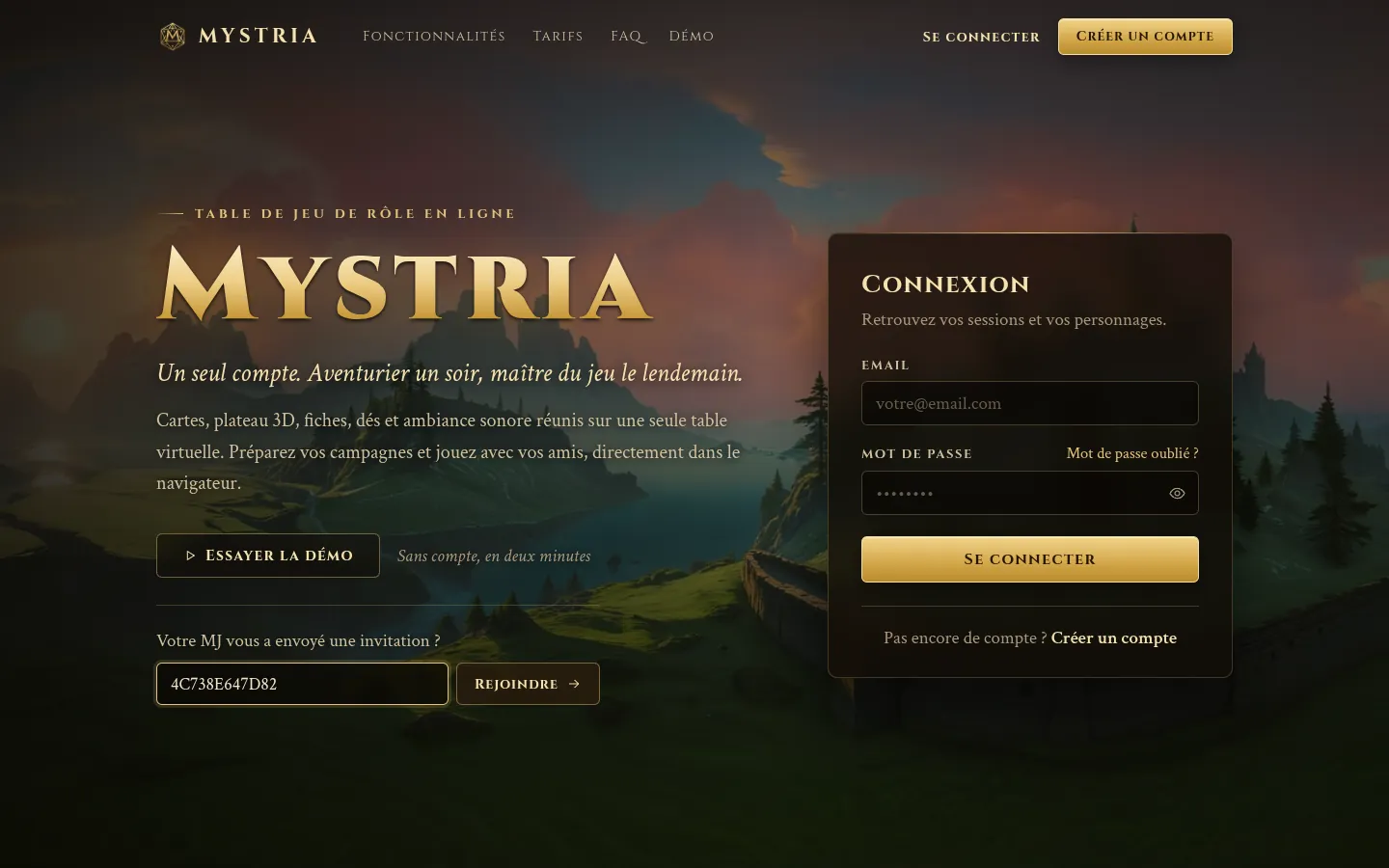
- Nothing to install. Everything happens in the browser, on a computer or a phone.
- A trial run before game day. Send them the demo link: in five minutes, they move a token, roll dice and open a character sheet, on their own and with no pressure.
- Voice in the same place. The built-in voice chat saves juggling two apps. If your friends are already on Discord, stick with Discord: what matters is that they only have one new thing to learn.
Simplify the rules
A beginner doesn't need to know the rules to play: they need to know what they can do and which die to roll.
- Pick a light system or a streamlined version. On Mystria, D&D 5e offers a Simple rules mode that keeps the essentials of the character sheets. Donjons & Chatons and Powered by the Apocalypse games are also excellent entry points.
- Call out the die to roll. "Make a Stealth check: roll a d20 and add your bonus." The dice window handles the quantity and the modifier; the player just clicks.
- Explain a rule when it comes up, never before. The first fight is the best tutorial.
- Be generous. A first game is judged by whether people want a second one, not by how precisely the rules were applied.
Prepare ready-to-play characters
Creating a character can take a whole evening. For an introductory game, prepare them yourself:
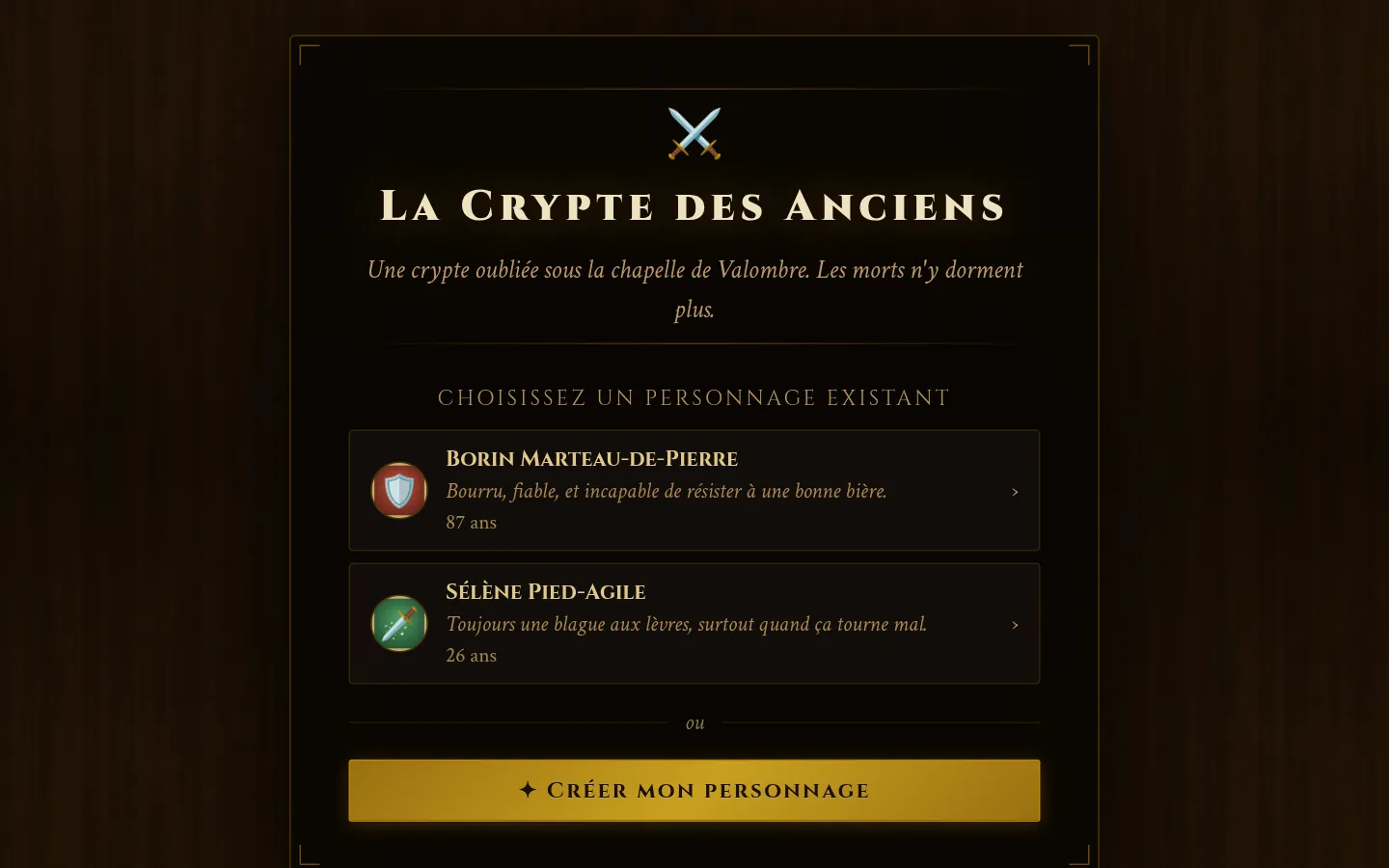
- Create three or four varied characters in your session's Characters tab: a fighter, a spellcaster, a stealthy character, a healer.
- Give each one a hook sentence in their description ("A former city guard, she can't stand injustice"). It says more than a list of ability scores.
- When they arrive, each player chooses an existing character. They discover it as they play.
Choose a first adventure
A good introductory adventure is short, clear and varied:
- Two to three hours, no more. Better to finish wanting more.
- A simple goal: find someone, retrieve an item, escape from a place.
- Three kinds of scenes: a conversation with a character, some exploration, a short fight. Everyone gets a moment to shine.
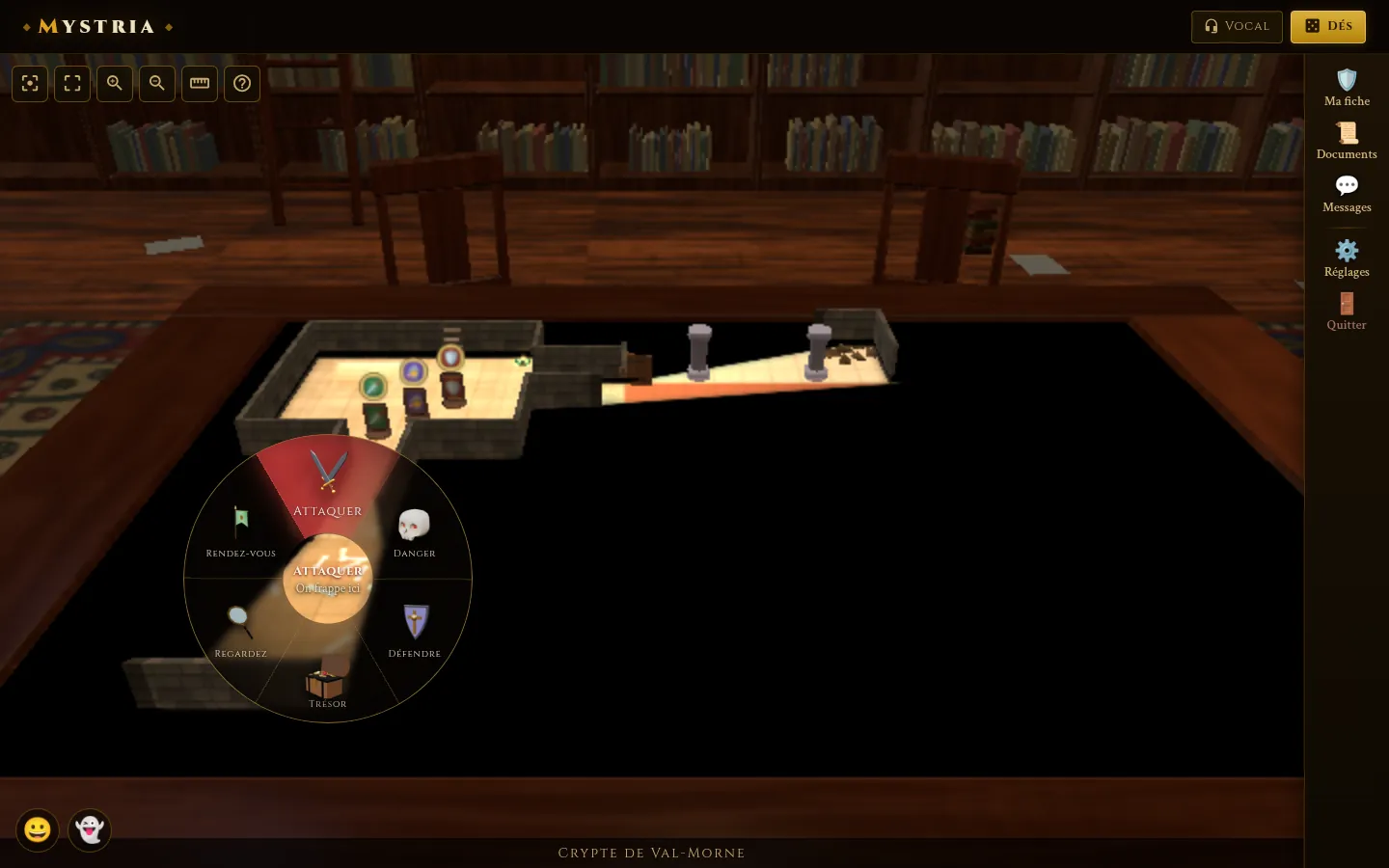
- A map to explore. With fog of war, gradually uncovering a location works really well on screen, even for players who know nothing about roleplaying.
Get everyone involved
Remotely, quiet players fade away quickly. A few habits help:
- Address each player by their character's name: "And you, Mira, what are you doing meanwhile?"
- Use private messages to give a player information the others don't have. Nothing gets people talking like a secret.
- Pings (hold down the right mouse button on the map) let you point out a spot without having to describe it, which helps those who don't dare to speak up.
- Set the ground rules at the start: which themes to avoid, how to signal that a scene makes someone uncomfortable. It's reassuring for everyone, beginners and veterans alike.
After the game
Take five minutes to ask everyone what they enjoyed most. If the enthusiasm is there, set the next date right away. Players who want to keep their character can create a free account at that point: the character comes with them.
Frequently asked questions
Do my friends have to pay anything?
No. Players never pay and don't need an account. Only the GM has an account, free with the Traveler plan (up to four players per table).
Do you need to know the D&D rules to play?
No. The GM guides the players and calls out the rolls. In D&D 5e, the Simple rules mode keeps character sheets easy to read for a first time.
How many players for an introductory game?
Three or four players is ideal: enough for the group to come alive, few enough that everyone gets time to talk.